Download our Apps and get extra 15% Discount on your first Order…!


© 2024 All rights reserved Ayurillam.
Download our Apps and get extra 15% Discount on your first Order…!

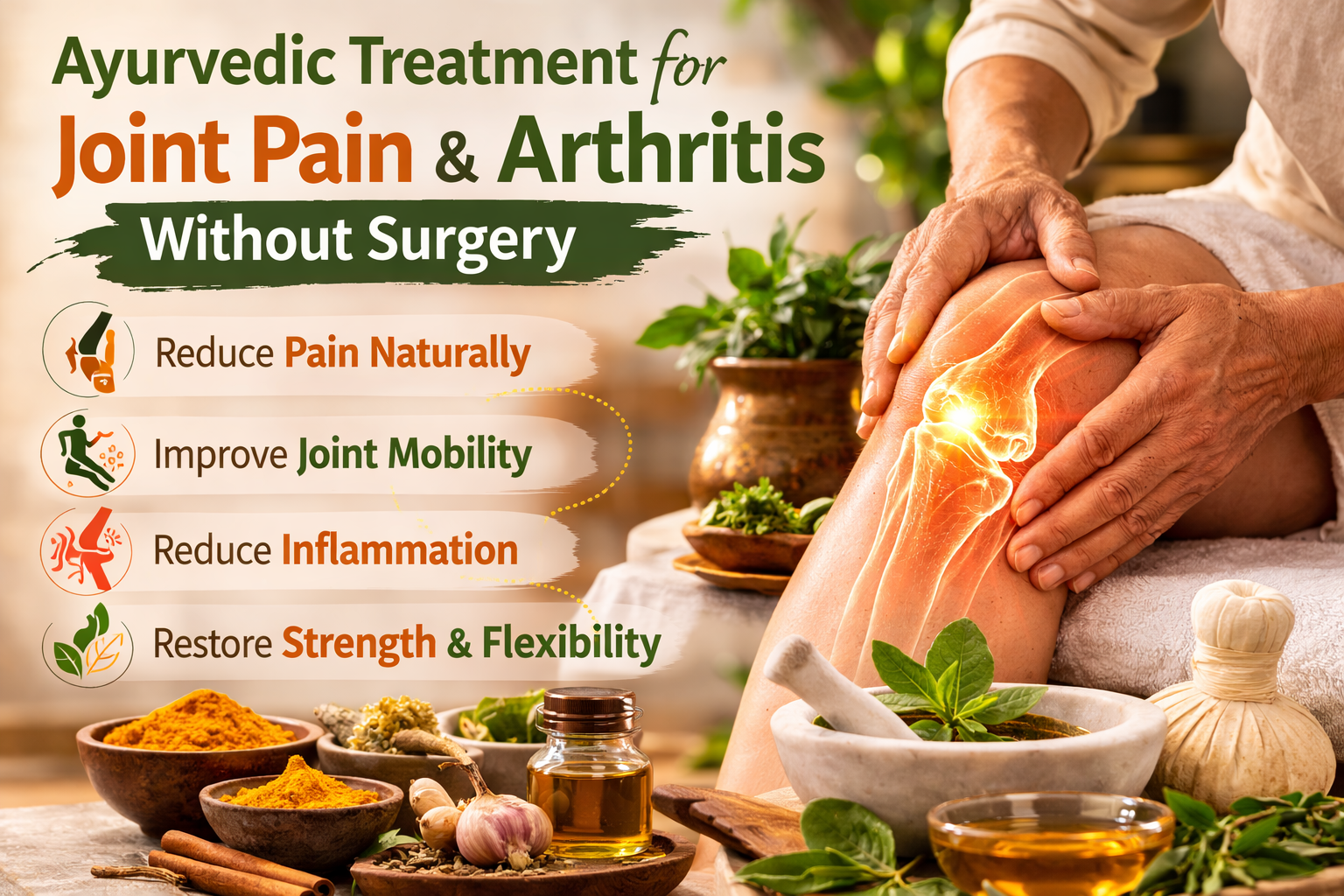
Joint pain and arthritis are among the most common chronic conditions affecting adults and elderly individuals. Stiffness, swelling, reduced mobility, and persistent discomfort can significantly impact quality of life. While conventional treatment often focuses on painkillers, steroids, or surgical procedures, Ayurveda offers a natural, non-surgical approach that addresses the root cause of joint degeneration.
Ayurvedic treatment for joint pain focuses on balancing aggravated doshas, removing toxins, strengthening joints, and restoring mobility. Instead of suppressing inflammation temporarily, it works to correct metabolic imbalance and nourish connective tissues.
For individuals seeking Ayurvedic treatment for arthritis without surgery, this holistic system provides long-term management strategies with minimal side effects when performed under supervision.
Causes of Joint Pain According to Ayurveda
In Ayurveda, most joint disorders are linked to aggravated Vata dosha. Vata governs movement in the body, including joint function. When Vata becomes imbalanced due to aging, improper diet, stress, or toxin accumulation (Ama), it dries out joint lubrication and weakens cartilage.
Arthritis is broadly categorized as:
Common Ayurvedic Causes Include:
When toxins combine with aggravated Vata, they settle in joints, causing stiffness, swelling, and pain.
How Ayurveda Treats Joint Pain Without Surgery
Ayurveda uses a combination of detoxification, internal herbal medicines, and external therapies to manage arthritis naturally.
The primary goals are:
This integrated approach makes natural arthritis treatment in Ayurveda a viable alternative for many patients.
Vasti Treatments for Arthritis
Among all therapies, Vasti (Basti) is considered the most powerful treatment for Vata disorders. Since arthritis is primarily a Vata condition, Vasti plays a central role in management.
Vasti involves administering medicated herbal oils or decoctions through the rectal route under medical supervision.
Why Vasti is Important:
There are different types of Vasti used in arthritis management:
Types of Vasti Used:
Regular Vasti therapy helps improve flexibility and reduce stiffness without surgical intervention.
Herbal Oils Used in Ayurvedic Joint Treatment
External oil therapies are essential in Ayurvedic treatment for knee pain and arthritis. Warm medicated oils are applied through massage and specialized procedures to nourish tissues and reduce pain.
Commonly Used Herbal Oils:
These oils are selected based on the patient's condition and dosha imbalance.
Benefits of Herbal Oil Application:
Oil therapies may be combined with steam (Swedana) or localized treatments like Janu Basti for knee pain.
Additional Ayurvedic Therapies for Arthritis
Apart from Vasti and oil application, supportive therapies may include:
These treatments help enhance mobility and reduce chronic discomfort.
Internal Herbal Support
Internal medicines are prescribed to detoxify and strengthen joints.
Frequently Used Herbal Ingredients:
These herbs support anti-inflammatory action and improve bone metabolism.
Internal medicines complement external therapies, making Ayurvedic arthritis management more effective.
Long-Term Benefits of Ayurvedic Joint Treatment
With consistent therapy and lifestyle correction, patients may experience:
Ayurveda emphasizes gradual improvement rather than instant suppression.
Lifestyle & Diet Recommendations
Diet plays a crucial role in arthritis management.
Recommended:
Avoid:
Correcting digestion prevents further toxin accumulation in joints.
Who Can Benefit from Ayurvedic Treatment?
Ayurvedic treatment for arthritis without surgery is beneficial for:
However, advanced joint deformities may require integrative medical consultation.
Final Thoughts
Joint pain and arthritis are not merely age-related problems; they are signs of deeper metabolic and dosha imbalance. Ayurveda addresses the root cause by balancing Vata, removing toxins, and nourishing connective tissues.
Through therapies like Vasti, herbal oil applications, detox procedures, and internal herbal medicines, Ayurvedic treatment for joint pain offers a non-surgical path toward improved mobility and reduced inflammation.
Early intervention and consistent therapy play a vital role in preventing long-term complications and maintaining joint health naturally.
The latest information about shipping services and our promotions