Download our Apps and get extra 15% Discount on your first Order…!


© 2024 All rights reserved Ayurillam.
Download our Apps and get extra 15% Discount on your first Order…!

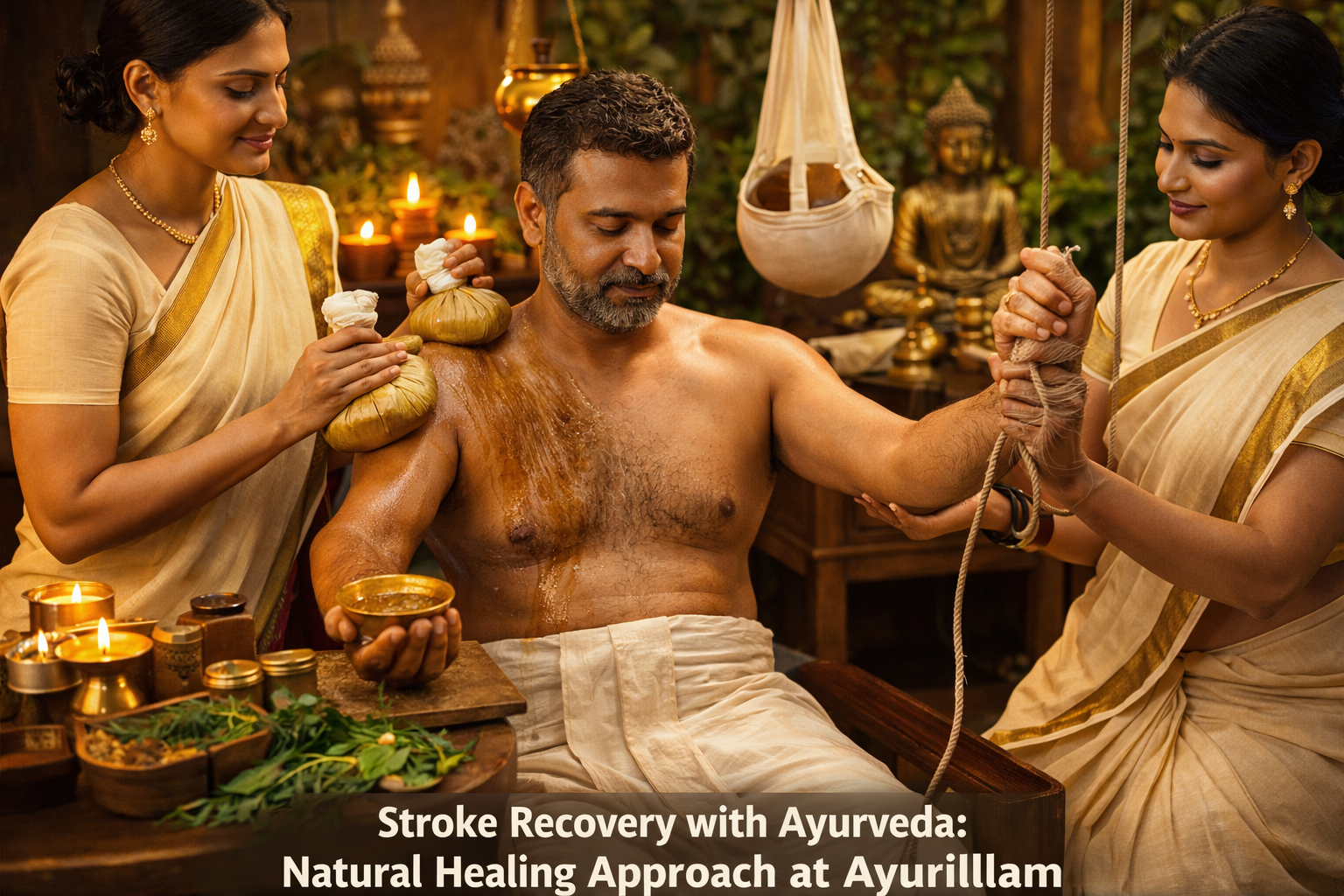
Stroke is a life-altering condition that affects mobility, speech, memory, and overall quality of life. Recovery can be physically and emotionally challenging for both patients and families. While conventional rehabilitation focuses on physiotherapy and medication, Ayurveda offers a complementary and holistic approach that supports nerve regeneration, muscle strength, and overall neurological balance.
structured Ayurvedic treatment for stroke recovery is designed to promote gradual healing, improve motor function, and enhance long-term rehabilitation outcomes through personalized care.
This guide explains:
Ayurvedic Perspective on Stroke
In Ayurveda, stroke is often correlated with Pakshaghata , a condition caused by aggravated Vata dosha affecting the nervous system. Classical Ayurvedic literature such as the Charaka Samhita describes Vata imbalance as the primary cause of neurological disorders involving paralysis and muscle weakness.
According to Ayurveda, stroke recovery focuses on:
This makes Ayurvedic stroke rehabilitation a root-cause-oriented approach rather than just symptomatic management.
How Ayurveda Supports Nerve Recovery
Nerve damage after stroke affects communication between the brain and muscles. Ayurveda addresses this through multiple mechanisms.
1. Vata Balancing
Vata governs movement and nerve impulses. When aggravated, it causes:
Ayurvedic therapies use warm medicated oils and nourishing herbs to stabilize Vata, promoting smoother nerve function.
2. Improved Blood Circulation
Proper circulation is essential for healing damaged brain tissues and nerves. Oil-based therapies enhance peripheral blood flow, supporting oxygen and nutrient delivery.
3. Tissue Nourishment (Dhatu Poshana)
Stroke often leads to muscle wasting and weakness. Ayurveda strengthens tissues through:
This helps improve muscle tone and nerve responsiveness.
4. Detoxification and Metabolic Correction
Toxin accumulation (Ama) may obstruct body channels. Gentle detox procedures support better nutrient absorption and neurological recovery.
Key Therapies for Stroke Recovery at Ayurillam
1. Abhyangam (Medicated Oil Massage)
Abhyangam is a full-body massage using warm herbal oils specifically chosen for neurological conditions.
Benefits:
Regular Abhyangam therapy for paralysis helps restore movement gradually.
2. Kizhi (Herbal Bolus Therapy)
Kizhi involves applying warm herbal poultices to affected areas.
Types commonly used in stroke recovery:
Benefits:
Kizhi treatment for stroke recovery is especially effective when combined with Abhyangam.
3. Pizhichil (Oil Bath Therapy)
In some cases, warm medicated oil is poured continuously over the body.
Benefits:
4. Basti (Medicated Enema Therapy)
Basti is considered the most powerful therapy for Vata disorders.
Benefits:
This therapy is often part of comprehensive Ayurvedic stroke treatment in Chennai.
Recovery Timeline in Ayurvedic Stroke Rehabilitation
Stroke recovery varies based on:
Early Stage (First 1–3 Months)
Visible improvements may include:
Intermediate Stage (3–6 Months)
With consistent therapy:
This stage requires structured therapy sessions and supervised exercises.
Long-Term Recovery (6–12 Months and Beyond)
Gradual improvements continue with:
Complete recovery depends on individual response, but many patients experience:
Diet and Lifestyle Support for Stroke Recovery
Ayurveda emphasizes supportive diet and routine.
Recommended:
Avoid:
A disciplined routine enhances long-term neurological healing.
Long-Term Management and Prevention
Stroke survivors must focus on preventing recurrence.
Ayurvedic management supports:
Regular monitoring and follow-up consultations ensure safe progress.
Who Can Benefit from Ayurvedic Stroke Treatment?
Ayurvedic stroke rehabilitation is suitable for:
Early intervention provides better outcomes, but even long-standing cases may benefit from structured therapy.
Why Choose Ayurillam for Stroke Recovery?
At Ayurillam, stroke rehabilitation programs are:
This integrative approach makes Ayurillam a trusted center for Ayurvedic stroke treatment in Chennai.
Final Thoughts
Stroke recovery requires patience, consistency, and a holistic healing approach. Ayurveda supports nerve regeneration, improves circulation, nourishes tissues, and enhances mobility through time-tested therapies such as Abhyangam and Kizhi.
While recovery timelines vary, structured and personalized Ayurvedic care can significantly improve strength, coordination, and overall well-being.
Consultation and early intervention are key to achieving optimal results. A well-planned Ayurvedic rehabilitation program can help restore independence and improve quality of life naturally.
The latest information about shipping services and our promotions